


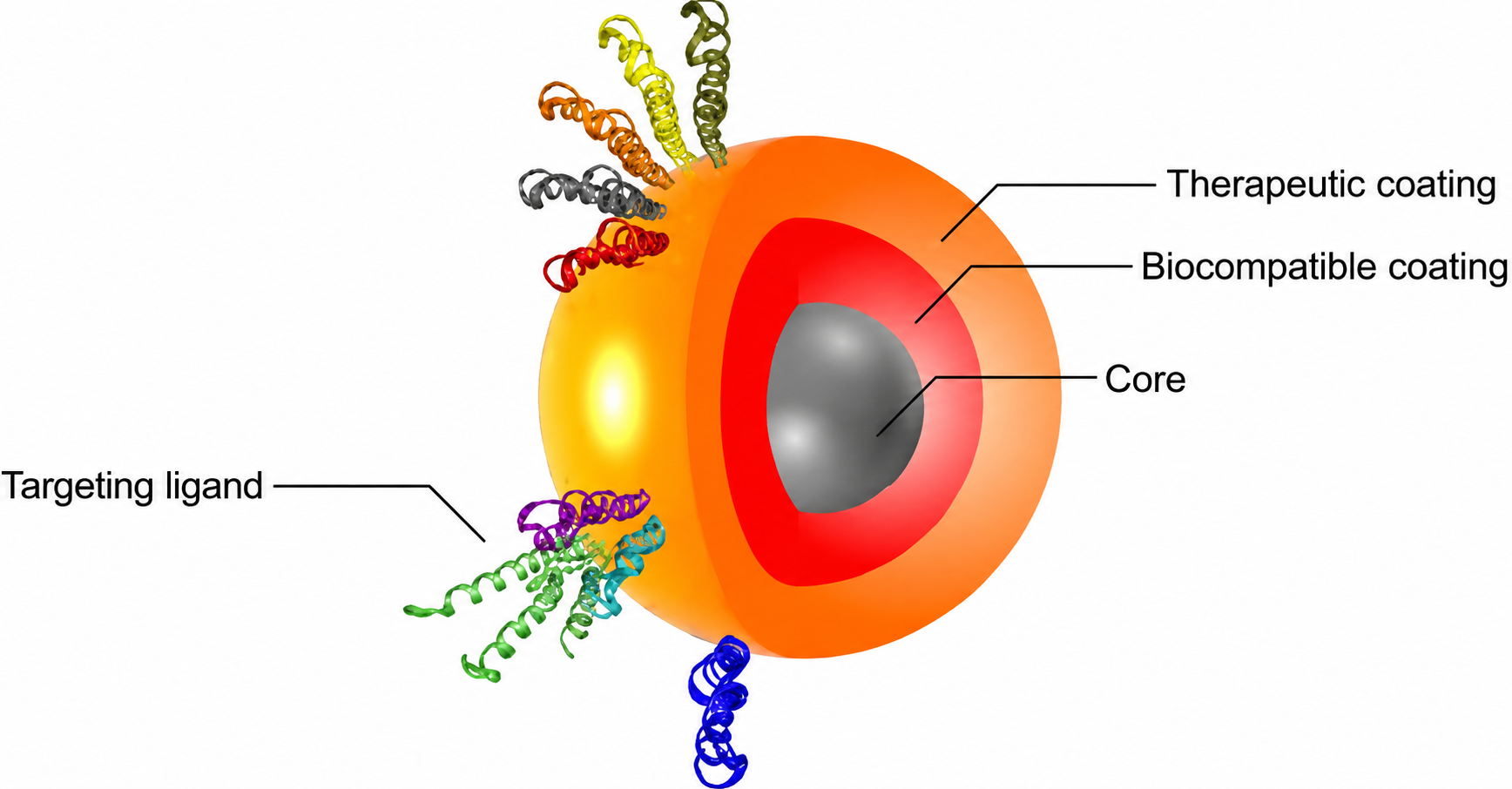
Polyelectrolyte coated nanoparticle SPION has become one of the most promising nanomaterials in modern science and biomedical engineering. Superparamagnetic Iron Oxide Nanoparticles (SPIONs) possess unique magnetic properties that make them suitable for a wide range of applications, including targeted drug delivery, magnetic resonance imaging (MRI), cancer therapy, biosensing, and tissue engineering. However, bare SPIONs often suffer from poor stability, aggregation, and limited biocompatibility. To overcome these challenges, researchers apply polyelectrolyte coatings that improve stability, increase circulation time in the body, and provide functional groups for attaching drugs or biomolecules. Today, polyelectrolyte-coated SPIONs are widely studied because they combine magnetic responsiveness with enhanced biological performance, making them valuable in both research and clinical settings.
What Is a Polyelectrolyte Coated Nanoparticle SPION?
A polyelectrolyte coated nanoparticle SPION is a superparamagnetic iron oxide nanoparticle covered with a layer of charged polymer molecules known as polyelectrolytes. These coatings improve nanoparticle stability by preventing aggregation and protecting the magnetic core from oxidation. Depending on the application, the coating may carry either positive or negative charges, enabling scientists to attach drugs, proteins, antibodies, DNA, or other functional molecules. The result is a multifunctional nanoparticle that combines excellent magnetic properties with superior chemical stability and biological compatibility.
Understanding Superparamagnetic Iron Oxide Nanoparticles (SPIONs)
Superparamagnetic Iron Oxide Nanoparticles are nanoscale particles primarily composed of magnetite (Fe₃O₄) or maghemite (γ-Fe₂O₃). Their unique feature is superparamagnetism, meaning they become magnetic only when exposed to an external magnetic field and lose magnetization once the field is removed. This property prevents particle clumping after treatment and makes SPIONs ideal for medical applications. Their small size also allows them to circulate through blood vessels and reach specific tissues with minimal disruption to surrounding cells.What Are Polyelectrolytes?
Polyelectrolytes are polymers containing multiple ionizable groups that become electrically charged in water. These charged polymers interact strongly with nanoparticle surfaces, creating a protective shell around SPIONs. Common examples include polyacrylic acid (PAA), polyethyleneimine (PEI), chitosan, alginate, dextran sulfate, and poly(styrene sulfonate) (PSS). Each type of polyelectrolyte offers distinct chemical and biological properties, allowing researchers to customize nanoparticles for different applications.
Why Are SPIONs Coated with Polyelectrolytes?
Bare SPIONs are chemically unstable and tend to aggregate because of magnetic attraction between particles. Aggregation reduces their effectiveness and limits biomedical applications. A polyelectrolyte coating creates electrostatic repulsion between particles, significantly improving dispersion in biological fluids. Additionally, the coating increases resistance to oxidation, enhances circulation time in the bloodstream, reduces toxicity, and provides functional groups for attaching therapeutic agents or targeting molecules.
Types of Polyelectrolytes Used for SPION Coating
Several natural and synthetic polyelectrolytes are used to coat SPIONs. Chitosan is widely used because it is biodegradable and biocompatible. Polyethyleneimine provides strong positive charges, making it suitable for gene delivery. Polyacrylic acid offers excellent stability and surface functionality, while alginate improves biocompatibility for tissue engineering. Dextran sulfate enhances blood compatibility, and poly(styrene sulfonate) is frequently used in multilayer coating systems to improve structural stability.
Methods for Preparing Polyelectrolyte Coated SPIONs
Researchers employ various synthesis methods depending on the intended application. The co-precipitation method is the most common because it is simple, cost-effective, and scalable. Thermal decomposition produces highly uniform nanoparticles with excellent magnetic properties. Hydrothermal synthesis offers precise control over particle size, while microemulsion techniques generate extremely small nanoparticles with narrow size distributions. After nanoparticle formation, polyelectrolyte coatings are applied using layer-by-layer assembly, electrostatic adsorption, or chemical grafting.
Layer-by-Layer Assembly Technique
The layer-by-layer assembly method involves alternating positively and negatively charged polyelectrolytes on the nanoparticle surface. This process forms multiple thin layers that improve stability and allow researchers to incorporate drugs, proteins, or imaging agents into the coating. The technique also provides precise control over coating thickness and surface chemistry, making it popular in advanced biomedical research.
Physical Properties of Polyelectrolyte Coated SPIONs
These nanoparticles exhibit remarkable physical characteristics. They generally range from 10 to 100 nanometers in diameter, possess high surface area, excellent magnetic responsiveness, and improved colloidal stability. Their magnetic behavior enables remote manipulation using external magnets, while their nanoscale dimensions facilitate penetration into tissues and cells for diagnostic or therapeutic purposes.
Chemical Properties
The polyelectrolyte coating significantly influences chemical behavior. Surface charge affects interactions with cells, proteins, and biological membranes. Functional groups such as carboxyl, amino, and hydroxyl groups enable chemical modification and conjugation with drugs or antibodies. The coating also enhances resistance to oxidation, improving the long-term stability of the nanoparticles.
Biomedical Applications
Polyelectrolyte coated nanoparticle SPIONs have transformed biomedical science. They are extensively used for magnetic resonance imaging, targeted drug delivery, hyperthermia therapy, biosensors, tissue engineering, stem cell tracking, gene delivery, and cancer treatment. Their multifunctional nature allows researchers to combine diagnosis and therapy into a single nanoplatform, often referred to as theranostics.
Targeted Drug Delivery
One of the most important applications is targeted drug delivery. Drugs attached to polyelectrolyte-coated SPIONs can be guided to diseased tissues using external magnetic fields. This targeted approach reduces side effects, improves therapeutic efficiency, minimizes drug dosage, and enhances patient outcomes. Controlled drug release mechanisms further improve treatment precision.
MRI Contrast Agents
SPIONs are widely used as contrast agents in Magnetic Resonance Imaging because of their strong magnetic properties. The polyelectrolyte coating improves circulation time and prevents aggregation, resulting in clearer and more accurate imaging. Researchers continue developing advanced SPION formulations for early disease diagnosis and high-resolution imaging.
Cancer Treatment
Cancer therapy has benefited significantly from these nanoparticles. SPIONs can carry chemotherapy drugs directly to tumors while magnetic hyperthermia generates localized heat that destroys cancer cells. Combining drug delivery and hyperthermia increases treatment effectiveness while reducing damage to healthy tissues.
Gene Delivery Applications
Gene therapy requires safe and efficient delivery systems. Positively charged polyelectrolytes such as polyethyleneimine bind DNA or RNA molecules, protecting them during transport into cells. SPIONs further enable magnetic targeting, increasing gene transfer efficiency and reducing systemic exposure.
Biosensors and Diagnostics
Polyelectrolyte coated SPIONs are valuable components in biosensors because they provide large surface areas for immobilizing biomolecules. Their magnetic properties facilitate rapid separation and detection of pathogens, proteins, and biomarkers. These features support fast, sensitive, and accurate diagnostic technologies.
Tissue Engineering
In tissue engineering, SPIONs help create scaffolds that support cell growth and tissue regeneration. Magnetic stimulation can influence cell differentiation and improve tissue formation. The polyelectrolyte coating enhances compatibility with living cells, making these nanoparticles useful for regenerative medicine.
Advantages of Polyelectrolyte Coated SPIONs
These nanoparticles offer numerous advantages, including improved stability, enhanced biocompatibility, excellent magnetic responsiveness, customizable surfaces, controlled drug release, reduced toxicity, high loading capacity, and multifunctionality. Their versatility allows integration into numerous medical and industrial applications.
Challenges and Limitations
Despite their benefits, several challenges remain. Large-scale production with consistent quality is difficult, long-term toxicity studies are still ongoing, regulatory approval is complex, and manufacturing costs remain relatively high. Researchers continue working to improve reproducibility, safety, and commercialization.
Future Research Directions
Future research focuses on developing smarter nanoparticles capable of responding to pH, temperature, enzymes, or light. Artificial intelligence-assisted nanoparticle design, personalized medicine, multifunctional theranostic systems, and environmentally friendly synthesis methods are expected to shape the next generation of SPION technologies.
Environmental Applications
Beyond medicine, polyelectrolyte coated SPIONs are increasingly used in environmental remediation. They efficiently remove heavy metals, dyes, pesticides, and organic pollutants from contaminated water. Their magnetic properties enable rapid recovery and reuse, making them environmentally sustainable.
Industrial Applications
Industrial sectors utilize SPIONs in catalysis, magnetic separation, wastewater treatment, electronic devices, sensors, and advanced coatings. Their durability, magnetic control, and customizable surface chemistry continue expanding their commercial potential.
Safety Considerations
Before clinical use, researchers carefully evaluate toxicity, biodistribution, biodegradation, immune response, and long-term accumulation. Proper selection of biocompatible polyelectrolytes significantly improves safety while minimizing adverse biological effects.
Conclusion
Polyelectrolyte coated nanoparticle SPION technology represents one of the most significant innovations in nanotechnology and biomedical science. By combining the exceptional magnetic properties of Superparamagnetic Iron Oxide Nanoparticles with protective and functional polyelectrolyte coatings, researchers have created versatile nanomaterials suitable for diagnostics, drug delivery, cancer therapy, biosensing, tissue engineering, and environmental applications. Although challenges related to large-scale production, safety evaluation, and regulatory approval remain, ongoing research continues to improve their performance and expand their real-world applications. As nanomedicine advances, polyelectrolyte-coated SPIONs are expected to play an increasingly important role in precision medicine, targeted therapies, and next-generation healthcare technologies.




 Indonesia
 Arabic
 French
 Spanish
 Portuguese
 Deutsch
 Turkish
 Dutch
Dutch
 Italiano
 Russian
 Romaian
 Portuguese (Brazil)
 Greek
Greek