


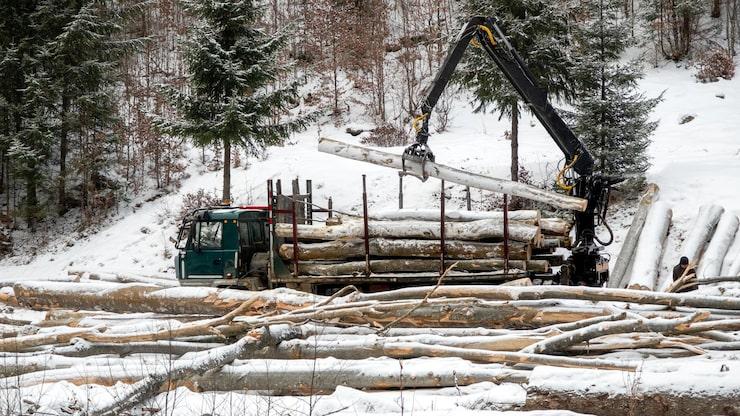
Forestry machinery plays an important role in activities ranging from harvesting and processing timber to transporting materials and managing planted forests. Modern equipment can help forestry operators handle demanding working environments while improving operational control, safety, productivity, and resource utilization.
According to a Vyansa Intelligence report, Brazil’s forestry machinery industry was valued at USD 462 million in 2025 and is projected to reach USD 512 million by 2032, representing a CAGR of 1.48% from 2026 to 2032. These figures provide a quantitative perspective on an industry influenced by forest management practices, equipment modernization, operational efficiency, technology adoption, environmental requirements, and the development of Brazil’s forestry value chains.
Mechanization Is Strengthening Forestry Operations
Forestry activities often involve challenging terrain, heavy materials, variable weather conditions, and demanding work cycles. Machinery can reduce the physical burden associated with these operations while allowing forestry companies to organize harvesting, extraction, processing, and transportation more systematically.
Equipment such as harvesters, forwarders, skidders, loaders, chippers, and specialized processing machinery can perform different functions within forestry operations. The appropriate equipment depends on the type of forest, terrain, harvesting method, and operational requirements.
The industry analysis therefore needs to consider machinery as part of a wider forestry production system rather than as isolated equipment.
Sustainable Forest Management Shapes Equipment Requirements
Brazil's government defines Sustainable Forest Management as the administration of forests to obtain economic, social, and environmental benefits while respecting the mechanisms that sustain the forest ecosystem. The Brazilian Forest Service also identifies a Sustainable Forest Management Plan as the technical document establishing the guidelines and procedures for forest administration.
This approach has implications for machinery selection. Equipment needs to support productive operations while fitting within approved management practices and environmental requirements.
According to this forestry machinery industry report, machinery development is therefore closely connected with how forestry operations are planned, managed, monitored, and executed.
Harvesting Equipment Needs to Match Forest Conditions
Forestry harvesting can involve different methods depending on forest characteristics and operational objectives. Machinery must be selected according to factors such as terrain, tree characteristics, accessibility, harvesting systems, and the intended handling of forest products.
Harvesters can combine several functions, while forwarders and skidders can support the movement of harvested material. Loaders and processing equipment can then contribute to subsequent stages of the operation.
This makes equipment compatibility particularly important. A machine that performs effectively in one forestry environment may not necessarily be appropriate for another.
Technology Is Changing Equipment Capabilities
Modern forestry machinery increasingly incorporates electronic controls, sensors, automation, digital monitoring, and operator-assistance technologies.
These systems can provide information about equipment performance and operating conditions. Digital controls can also help operators manage machine functions more precisely.
The latest market analysis of forestry machinery therefore involves both mechanical capabilities and digital technology. The combination of physical equipment and electronic systems can influence how machines are operated and maintained.
Operator Efficiency Remains Important
Forestry machinery can be technologically advanced, but operators remain central to successful equipment use. Machine settings, working conditions, harvesting techniques, and maintenance practices can all influence performance.
Ergonomic controls and digital interfaces can help operators interact with increasingly sophisticated equipment. Better visibility, accessible controls, and information displays can also contribute to the overall working environment.
Operator training is therefore an important consideration when forestry businesses introduce new machinery or upgrade existing fleets.
Maintenance Supports Operational Reliability
Forestry machinery operates in environments where equipment can encounter dust, mud, vibration, branches, timber residues, and uneven terrain. These conditions can place significant demands on mechanical and hydraulic systems.
Routine inspection, cleaning, lubrication, component replacement, and preventive maintenance can help support reliable operation. Maintenance planning is particularly important when machinery is used continuously during intensive forestry activities.
Equipment downtime can interrupt coordinated operations because harvesting, extraction, transportation, and processing activities are often interconnected.
Forestry Machinery Supports Planted Forest Development
Brazil's Ministry of Agriculture and Livestock operates the Plano Floresta+ Sustentável, an initiative designed to support the development of planted forests, productive forest chains, and the recovery of degraded areas. The programme includes pillars covering planted forests, the forest economy, and connections between participants in forest-based production chains.
The development of planted forestry systems creates requirements for machinery capable of supporting activities throughout the production cycle.
Equipment can be used in site preparation, planting, maintenance, harvesting, material handling, and transportation, depending on the production system.
Environmental Requirements Influence Machinery Use
Forestry machinery operates within a regulatory environment where sustainable resource use and forest conservation are important considerations.
The Brazilian Institute of Environment and Renewable Natural Resources,IBAMA, provides official procedures for sustainable forest management in federal public forests and conservation units. The requirements include appropriate registration and compliance with applicable legal and regulatory frameworks.
This means forestry machinery cannot be considered separately from the regulatory conditions governing forest operations.
Traceability Is Becoming More Relevant
The movement and origin of forest products are also subject to control mechanisms. IBAMA's Documento de Origem Florestal, or DOF, system covers forest products that are subject to control and require documentation for transportation.
IBAMA also operates the Sistema Nacional de Controle da Origem dos Produtos Florestais, known as Sinaflor, which integrates control of the origin of timber, charcoal, and other forest products and by-products.
For forestry operators, these systems highlight the importance of organized documentation, compliance, and traceability alongside physical machinery operations.
Equipment Selection Requires Operational Planning
Forestry companies need to consider more than machine specifications when selecting equipment. Terrain, forest type, harvesting system, transportation requirements, operator skills, maintenance capabilities, and environmental conditions can all influence equipment suitability.
Fleet coordination is also important. Harvesting equipment needs to work effectively with extraction, loading, transportation, and processing activities to avoid bottlenecks.
The market research report can provide a broader perspective on the industry, but equipment decisions ultimately depend on the operational characteristics of individual forestry businesses.
Safety Remains a Core Consideration
Forestry operations involve heavy machinery, moving timber, cutting equipment, uneven terrain, and other potential workplace hazards. Machinery design and operating procedures therefore need to account for worker safety.
Brazil's regulatory environment includes specific controls for certain forestry equipment. IBAMA, for example, maintains official regulations concerning the registration and licensing of chainsaw-related commercial activities and use.
Safety considerations extend from machine design to operator training, maintenance, workplace procedures, and equipment management.
Digitalization Can Improve Operational Visibility
Connected machinery can provide operators and managers with more information about equipment usage and operating conditions. Data from machines can support maintenance planning and help identify operational issues.
Digital systems can also contribute to fleet management by providing information that assists with scheduling and equipment utilization.
However, technology needs to remain practical and reliable in forestry environments. Connectivity, durability, ease of use, and compatibility with existing systems can all influence the value of digital features.
The Role of Forestry Machinery in Brazil’s Forest Economy
Brazil's forestry machinery industry is connected with a broader ecosystem involving planted forests, sustainable management, timber production, forest-product processing, transportation, and environmental governance.
The forestry machinery industry report provides a quantitative perspective on the sector, while official Brazilian forestry institutions emphasize sustainable management, productive forest development, traceability, and regulatory compliance.
As forestry operations become increasingly mechanized and technology-enabled, equipment manufacturers and operators need to balance operational efficiency with safety, environmental responsibility, durability, and practical usability. Machinery that can perform reliably under demanding conditions while supporting more controlled and sustainable forestry practices can remain an important part of Brazil's evolving forest economy.




 Indonesia
 Arabic
 French
 Spanish
 Portuguese
 Deutsch
 Turkish
 Dutch
Dutch
 Italiano
 Russian
 Romaian
 Portuguese (Brazil)
 Greek
Greek